
Why Does Your Weekly Grocery Trip Still Take 41 Minutes When AI Could Cut It in Half?
5 min read
5 min read
Supermarkets carry 40,000 to 50,000 products, but you only need a few. Despite spending 53 hours per year navigating aisles, we still manage to forget the one item we came for (source).
Even worse, 31% of food purchases are wasted, reflecting our struggle to predict what we’ll actually use (source). Grocery shopping is one of the most inefficient processes, but AI-powered tools are now making it easier to track what we need, save time, and reduce waste. And the best part?
Despite all this time invested, we still manage to forget the one item that we actually came for while at the same time buying three kinds of cheese that we will not eat.
Grocery shopping is one of the most unoptimized processes in the business world, yet no one is talking about it. The entire supply chain has been automated, but we still push metal carts through stores manually. These stores are designed to make us walk by 49,950 unnecessary items.
AI is now making its way into grocery retail, finally putting an end to this inefficiency. It helps people avoid everyday struggles, like remembering what’s already in the pantry. It also helps with calculating real consumption patterns. Plus, it prevents us from falling for buy-one-get-one-free offers on items that don’t really interest us. With the right AI/ML development services in place, retailers can turn these insights into smarter recommendations, more accurate demand forecasting, and a shopping experience that truly adapts to each individual.
The AI-powered grocery shopping partners are changing the way we shop, save, waste less, and pick healthier options by breaking down grocery trips as a data issue; they have always been.
You walk past everything twice. The average trip takes 41 minutes. That’s for maybe 20 items. By your third forgotten-item trip this week, you’re a regular. The cashiers know your name. They’ve stopped judging your ice cream frequency. Your car knows the route better than you do on your daily commute.
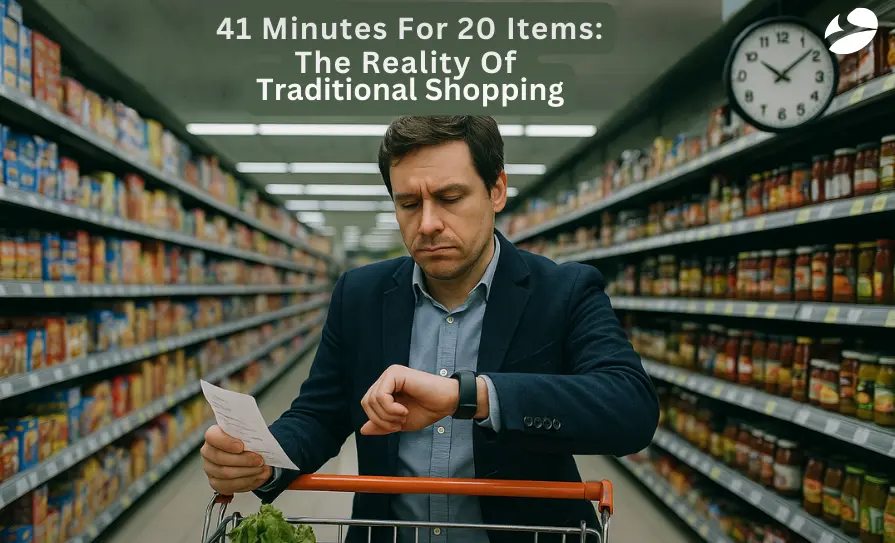
Those end-cap displays are retail manipulation at its finest. You lose every time. That artisanal honey looked special. You already have three jars at home. None is open.
Your dietary goals lie between the bakery and frozen foods. Fresh bread smell is basically kryptonite. The ice cream aisle delivers the final blow.
The cheapest option charges $15 for delivery for $30 worth of groceries. Math stops making sense. The algorithm thinks buying diapers once means forever. It doesn’t understand that kids grow up. These recommendations are stuck in 2019. AI in grocery retail could fix this mess. With smarter AI application development services, retailers can build models that actually learn—understanding changing household needs, predicting purchasing cycles, and personalizing recommendations that evolve with life, not contradict it.
Instead, we’re drowning in irrelevant suggestions. The personal touch feels more like stalking. But here’s what retail executives often ask: “What’s the actual ROI on implementing AI shopping assistants?”
The data shows that businesses typically see a 20-30% reduction in operational costs within the first year. This is due to decreased returns, optimized inventory, and improved customer lifetime value. Essentially, the system pays for itself twice over. Meanwhile, customers actually enjoy shopping again.
These systems adapt in real-time, knowing your gluten-free journey lasted exactly three days before pizza won the battle, yet they keep your dietary restrictions on file, just in case hope springs eternal again.
AI in grocery retail integrates health goals without the passive-aggressive judgment of fitness apps, understanding that buying kale and buying cookies aren’t mutually exclusive life choices but rather the beautiful chaos of being human.
Predictive Shopping Intelligence
Your shopping AI knows you're out of coffee before your morning brain fog even lifts—predicting consumption patterns with actuarial-level precision, minus the existential dread. And with advanced AI application development services powering these insights, businesses can deliver hyper-personalized shopping moments that feel almost intuitive.
With AI/ML development services, you can build advanced machine-learning models that analyze patterns like purchase frequency, seasonal demand, and even household composition. These insights power highly accurate predictive shopping behaviors and smarter recommendations—almost like having a digital butler that actually pays attention and evolves with every interaction.
The system anticipates seasonal needs better than farmers' almanacs, manages household inventory like a Swiss warehouse, and knows when your monthly pizza night needs extra supplies – no embarrassing explanations required.Business leaders frequently wonder: “How do we handle customer data privacy with all this personalization?” The answer lies in using zero-knowledge architectures. In this approach, AI processes patterns without storing identifiable information.
Federated learning is key here, as it keeps personal data on user devices while still improving the system.
It’s like having a photographic memory that remembers only the essential parts and forgets who you are.
The system strictly respects your dietary restrictions, whether you’re keto, vegan, or following the carnivore diet, where vegetables are seen as the enemy.
It also adjusts for seasonal preferences, automatically suggesting pumpkin spice everything in fall because, let’s face it, resistance is futile.
Brand loyalty gets factored in because switching from Heinz to Hunt’s ketchup might actually cause family riots at dinner.
BiztechCS can develop AI shopping assistants with ai application development services, custom recommendation engines that adapt to individual user preferences, alongside sophisticated price-comparison algorithms that scan multiple retailers in real time.
Pantry management integration means no more discovering that ancient can of beans from 2019 lurking behind the pasta.
Budget-wise planning keeps you from eating ramen while fantasizing about ribeye. The system causes less food to be thrown away than your guilt ever could. It understands Tuesday means quick dinners due to the chaos of soccer practice.
Meal suggestions are tailored to your cooking skills, never suggesting beef Wellington when you are struggling with grilled cheese.

Promotions and coupons are automatically integrated without needing scissors or printer ink. BiztechCS solutions can provide voice-activated shopping features that are compatible with Alexa, Google Assistant, and other platforms.
Real-time price monitoring captures those sly price drops happening in the middle of the week instantly. Your shopping assistant becomes the bargain hunter that you always pretended to be.
Voice commands are still accepted, even with your poor pronunciation of quinoa. Multiple users can interact with the assistant at the same time without making chaos with duplicates. The assistant can understand “the green stuff for the thing” as a reference to cilantro for tacos. CTOs often inquire: “What’s the integration complexity with our existing POS and inventory systems?”
Modern AI platforms use an API-first architecture that connects to legacy systems via standardized webhooks and REST endpoints. This allows for integration in weeks, not months, without the need to replace your existing infrastructure – it’s like adding a smart brain to your existing nervous system.
Ready to give your customers the voice-activated shopping experience they expect while your legacy systems still work perfectly? Stop watching market share disappear to tech-savvy competitors.
User experience improvements now predict your needs better than your therapist, suggesting wine when your cart contains frozen dinners for one and cat food for seven. The platform knows when you’re panic-buying for unexpected guests versus when you’re doing your regular zombie apocalypse prep shopping. AI in small retail transforms mindless clicking into strategic procurement that would make military supply chains jealous. These systems learn that your “quick grocery run” always costs $200 and plan accordingly.
Self-checkout optimization means machines no longer scream “unexpected item in bagging area” like possessed retail banshees. The carts track your spending in real time, gently suggesting that maybe three tubs of ice cream will suffice for tonight’s emotional eating.
These intelligent systems know precisely which checkout line moves fastest, unlike humans, who always pick the wrong one. Store operations managers consistently ask: “How quickly can staff adapt to these AI-powered tools?”
Training typically takes 2-3 days for basic operations, since the systems are designed to augment human work, not replace it – employees report feeling like they’ve gained superpowers rather than learning rocket science. Most prefer the AI assistance after just one week of use.
Medical compliance features ensure your groceries won’t interfere with medications or cause your doctor to question your life choices. The apps recognize when your “healthy eating phase” lasts exactly three days before reverting to pizza.
They suggest alternatives that actually taste good, rather than cardboard masquerading as rice cakes. These systems balance nutritional needs with the harsh reality that kale chips will never replace actual chips.
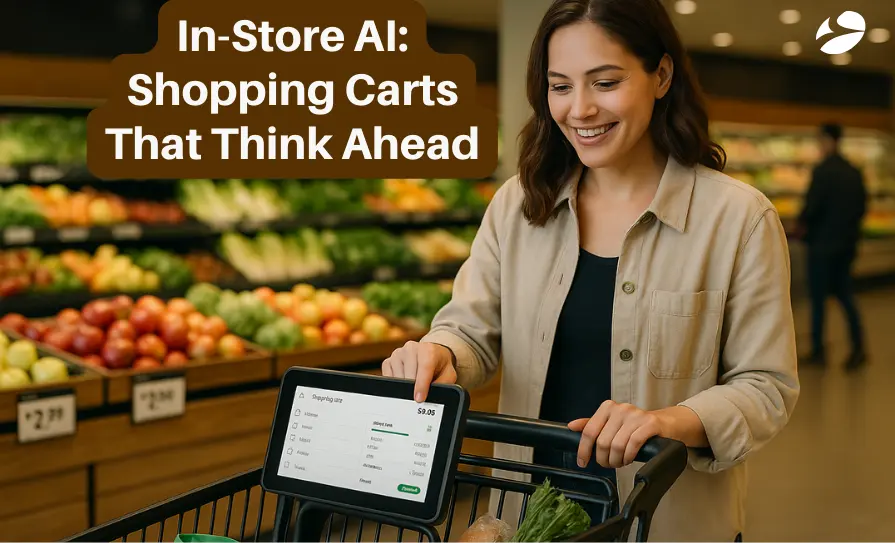
Average order values increase when AI suggests complementary items that make sense instead of random impulse buys near checkout. The systems reduce shopping time by 40%, giving customers more hours to pretend they’ll cook those ambitious recipes. Return rates drop dramatically when AI prevents accidentally buying dog food for cats.
Revenue growth follows naturally when shopping stops feeling like navigating a maze designed by sadistic retail architects. Retail strategists frequently question: “What about customers who resist technology adoption?”
Studies show that even tech-averse shoppers embrace AI assistance when it saves them 20 minutes per trip and $50 per month. The key is offering multiple touchpoints, from mobile apps to in-store kiosks, allowing customers to choose their comfort level while gradually realizing how AI can make life easier.
Are you watching your revenue potential walk out the door because your shopping experience feels stuck in 2010? Companies using AI report 15% less waste and 40% faster shopping times – that’s profit you’re leaving on the table.
We build cloud-native solutions that handle millions of concurrent users without breaking a sweat, unlike your current system, which panics when five people shop simultaneously. We seamlessly integrate AI in grocery retail with existing POS systems, inventory management, and e-commerce platforms without causing the technological equivalent of a toddler’s grocery store meltdown.
From the discovery phase through post-launch support, we develop rapid prototypes, implement agile methodologies, and ensure sub-second response times even when half the city decides to panic-buy bread before a snowstorm.
Our team builds voice-activated shopping features that actually understand “that green leafy thing for salads” means lettuce, not cannabis. We handle everything from user-friendly interfaces to ongoing maintenance, because someone needs to keep the digital shelves stocked while your competition still struggles with basic barcode scanners.
CFOs inevitably ask: “What’s the typical implementation timeline and when do we see returns?” Full deployment takes 3-4 months from kickoff to launch, with customer engagement improvements in 30 days. Positive ROI is typically achieved by month six – faster than teaching your teenage employee not to put bread under the milk.
The microservices architecture breaks the whole thing into small units that function independently; if one service crashes, the whole operation is not affected, unlike dominoes falling in a grocery store.
Load balancing strategies let traffic be distributed more efficiently than shoppers across checkout lanes. Optimization techniques in databases keep queries running faster than customers leaving the cash register at the self-service.
The capability for real-time data processing means AI in the grocery retail sector can handle flash sales without turning into digital molasses, processing thousands of transactions per second while your competitors’ systems are still buffering like it’s 1999.
The combination of these strategies guarantees that performance stays crisp even when Black Friday shopping chaos is in the air and your servers are sweating as much as a marathon runner in Death Valley.
The right technology partner makes the difference between a flawless system and one that crashes harder than your diet on day three — because choosing poorly costs more than all those impulse buys combined. With the right team, you also unlock AI/ML development services that help you understand customer behavior, predict needs before they arise, and automate decision-making so your systems don’t just work — they think with you.
BiztechCS builds these solutions without the technological tantrums, turning grocery chaos into profitable orders while your competition still argues about barcode placement.Ready to stop treating grocery shopping like medieval torture? Connect with us for a consultation and discover how AI can transform your grocery operations from soul-crushing tedium into something that actually works.
Artificial Intelligence (AI)
Development
10811

By Devik Gondaliya
Artificial Intelligence (AI)
2815

By BiztechCS
.NET
Artificial Intelligence (AI)
3691
By Devik Gondaliya
You are at the right place.
Projects Completed
Technical Experts
Happy Clients
Years of Experience
Book a free consultation call with us





By submitting this form, you agree to our Terms of Use and Privacy Policy. All information provided will be kept strictly confidential.