
How Can ERP Systems Enhance Real-Time Personalization in eCommerce?
10 min read
10 min read
According to an Epsilon study, 80% of consumers are more likely to purchase from brands that offer personalized experiences. It means that ERP systems are more than just process streamlining; they are at the core of business, influencing sales and customer retention.
With such an ERP for e-commerce solution, businesses can monitor inventory, manage orders, and attend to customers with high efficiency and personalization.
The benefits of ERP system integration in e-commerce extend beyond improving efficiency, making it a key factor in achieving customer satisfaction and driving business growth.
These adjustments take into account previous actions, current session activities, and other relevant factors. That could mean personalized recommendations, promotions, and updated content that changes as actions are taken by the user.
For example, if someone buys many product A, this may trigger the sale of product B to them, which might interest them. Real-time personalization incorporates various data, including browsing history, purchase patterns, geolocation, and social interaction, to provide an individualized shopping experience for every user.
Every single visitor should feel like the store was created with them in mind, which should potentially enhance conversions and customer satisfaction.
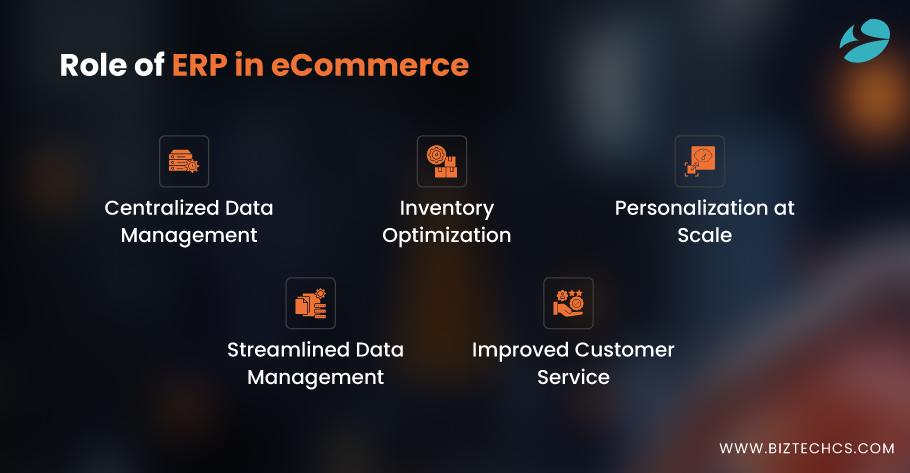
Knowing that all information is stored regarding the customer’s personalized experience actions means that every interaction becomes significant in enhancing the probability of conversion.
Items that are available in stock with a preference for customers are presented in a way that further enhances the shopping experience. This prevents disappointment as personalized suggestions will match what is actually in stock.
These segments, in return, can be offered promotions and products that meet specific needs. Such segmentation will ensure that every customer receives the most targeted and relevant offers, helping them to engage.
Their customers could be provided with customized pricing based on their purchasing history or location. This personalized touch keeps customers happy while Revenue opportunities are fully utilized.
Such personalized actions increase engagement and conversion rates by giving content that is most relevant to each customer. It ensures that marketing dollars are stretched further by focusing on customers with greater potential.
Customers can choose between fast and local delivery, depending on their convenience. These increase customer satisfaction as they empower customers with control over their own purchase experience.
The representatives have immediate access to all previous calls and purchases, as well as known product preferences. That guarantees personalized and efficient service toward the quick resolution of the customer’s issue.
By offering value in return for what the customer has just experienced, it gives the businesses an edge in speed and service resolution, improving their customer retention ratios.
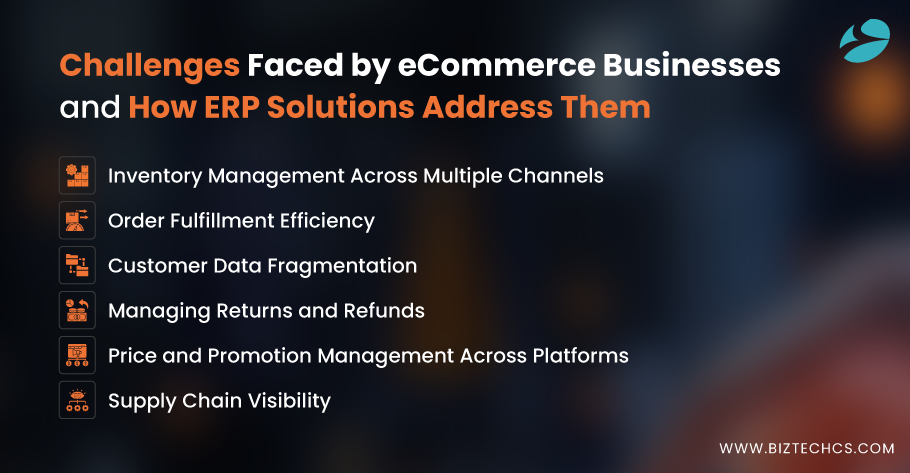
Manual inventory management, or the use of different systems, leaves a greater potential for errors and communication gaps. This inefficiency in inventory management has a negative impact on sales and damages the brand.
ERP solutions enable centralized inventory management and real-time synchronization of stock levels across all platforms, thereby reducing the likelihood of overselling or stockouts while optimizing inventory levels.
Manual order processing or fragmented systems create delays and errors, ultimately tarnishing the customer experience. Not having a single unified system to manage orders coming from multiple sources is inefficient and leads to mistakes.
ERP systems integrate order management, inventory, and shipping modules, optimizing those workflows to reduce delays while improving accuracy in order fulfillment.
Without a unified view of all customer interactions, businesses can hardly engage any of these customers. Even worse, the multiplicity of systems means duplication of effort when managing data, thus increasing the possibility of errors.
ERP systems consolidate the entire array of customer data into a single, unified database, enabling businesses to develop more accurate profiles and offer personalized service across all touchpoints.
One of the most challenging aspects is assessing the condition of returned goods for restocking decisions. Furthermore, refund management across multiple platforms without a clear system significantly increases the likelihood of errors.
ERP systems integrate return and refund management, which enables the straightforward management and tracking of returns over time for businesses, and assists in determining whether goods received back can be resold or need to be written off.
Time-critical promotions run in this fashion are thus difficult and obnoxious. Formally, for multi-channel businesses, the case becomes hopeless and impossible to offer consistent prices and promotions.
ERP solutions enable centralized pricing and promotions, where a change in prices is automatically reflected on all other channels with minimal manual intervention, thereby minimizing the chances of human error and ensuring consistency.
Supply chain visibility determines the likely scenarios of stockouts, delays, and other inefficiencies that can lead to process disruptions. When a business cannot track its suppliers, it may anticipate disruptions in operations and struggle to manage customer expectations as well.
Bad supply chain visibility does make consumers mad, especially when they are told that the delivery date has changed in the first few weeks.
Today, it is easy to achieve real-time integration with suppliers through the commercialization of ERP systems, allowing for instant visibility into inventory levels, order status, and shipping to facilitate the easier anticipation and management of disruptions.
When data from different channels is integrated through effective Ecommerce ERP Integration, shopping experiences can be customized, and products can be dynamically optimized based on real-time sales. Besides the efficiency of ERP systems, customer satisfaction and loyalty are built through consistent and customized experiences.
An ERP for eCommerce helps businesses mitigate operational inefficiencies, supports smooth decision-making, and upholds consistency across platforms. The seamless movement of inventory and management of returns are added advantages that keep the business agile and responsive.
Essentially, an ERP solution is the lifeblood of an e-commerce business that aspires to remain competitive and grow sustainably.
Development
ERP
2796

By Devik Gondaliya
Artificial Intelligence (AI)
Development
Ecommerce
10048

By BiztechCS
Ecommerce
6028
By yesha_bhatt
You are at the right place.
Projects Completed
Technical Experts
Happy Clients
Years of Experience
Book a free consultation call with us





By submitting this form, you agree to our Terms of Use and Privacy Policy. All information provided will be kept strictly confidential.