
7641
Logistics App: Discussing Technologies, Features, Development, and More
16 min read
7641
16 min read
"The logistics industry across the world will grow by $287.1 million between 2020 to 2024. This equates to a 5 percent increase in the CAGR."
The logistics industry carries out a large part of operational functions in the online business ecosystem. The logistics industry has to do it all, whether shipping through courier services, movers, packers, warehouse management, fleet management, order tracking, or order fulfillment. It would be fair to state that the entire eCommerce and online retail industries primarily depend on the logistics industry.In 2021, like most industries, the logistics industry, too, is undergoing a gradual yet permanent transformation in terms of tech adoption. Since the onset of the COVID-19 pandemic, the logistics industry has been at the forefront of disruption. The pandemic tested the supply chain resilience to the hilt and paved the way for quick tech adoption across the industry.
Enters the concept of logistics app development.
Logistics apps have made the sector more advanced, connected, and lucrative. In many ways, automated workflows have become the cornerstone to achieving efficiency. Digitization and incorporation of technologies make the sector more advanced, connected, and lucrative. The concept of logistics mobile app development has solved the major challenges faced by stakeholders. Logistics apps:
An ideal logistics app can prompt the flow of your business operation, increase productivity and opportunity. So if you’re looking forward to starting a logistics business or taking your existing logistics business online, you’re in the right place. This blog aims to help you with the know-how of logistics mobile app development. For the next 15 minutes, I will walk you through every necessary information about logistics mobile app development, including key technologies, challenges, features, advanced trends, etc. Here’s your five-step guide to “How to start a logistics business:”
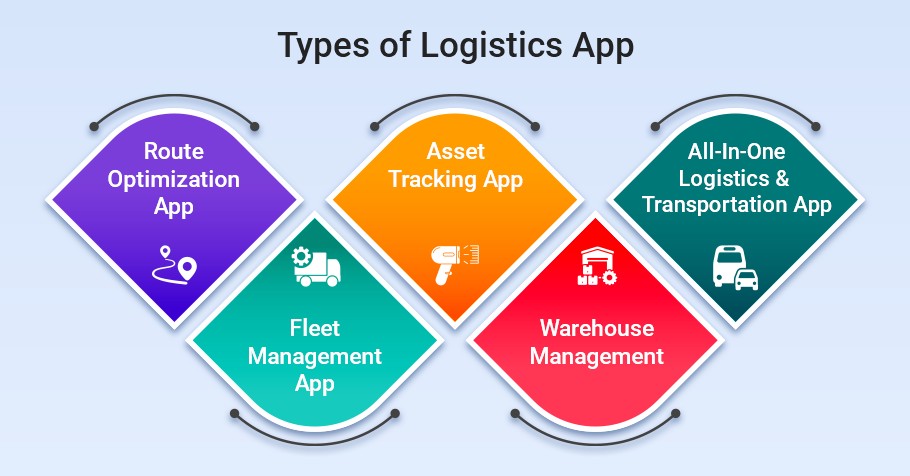
Check this out!
One of the coolest examples of an AI-based smart road system is that of Valerann. It is a traffic management platform that delivers information about road conditions to autonomous vehicles and users. You can get this for your app too! Your route optimization app clubbed with an advanced AI can cut-short your expenses to an entirely new level.
OTOH, you should try experiencing the working of a logistics app and find out how you want your app to be. Check out our ready-to-go prototype for your logistics app development.
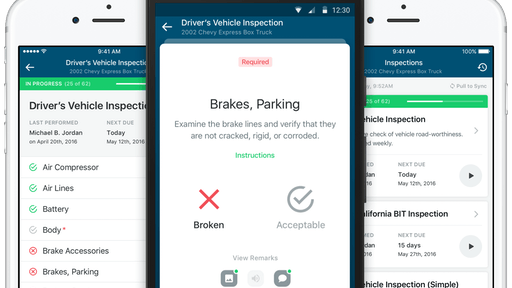
It is helpful to record and organize data and information related to vehicles and fleets to keep the overall fleet operation hassle-free. This solution helps fleet managers gain real-time visibility into their operations while increasing driver satisfaction and decreasing fuel usage through predictive analytics and accurate reporting. With these applications, you can reduce costs and boost performance.
An easy-to-understand example of fleet management is a trucking company. Cargo trucks often cover long miles and a large variety of environments. It is imperative for a rock-solid maintenance structure to exist so that a truck doesn’t break down in the middle of anywhere.
You can build transparency with your end-users as they can get the exact location of their orders with easy tracking to know when their shipment will arrive. It will significantly impact supply chain visibility for you and customers, which ultimately results in a great advantage.
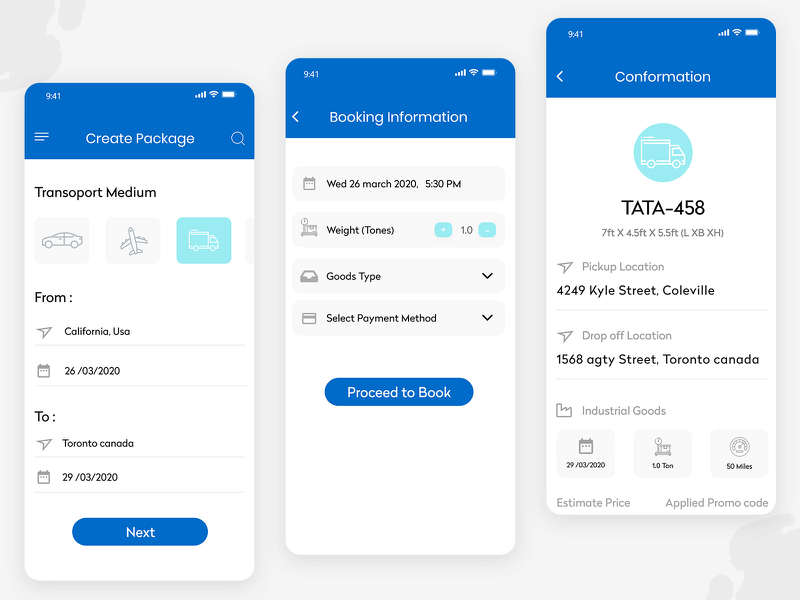
A typical on-demand logistics app will have three panels:
Example: FleetRoot for Fleet Management
UAE-based startup FleetRoot offers an IOT platform for managers and companies to control and manage their fleet. It offers fuel management solutions by providing fuel consumption and wastage reports. The platform monitors a vehicle’s performance and sends critical alerts to the system using sensors embedded in the system. FleetRoot also offers route optimization services and delivery solutions for the transportation of goods.
Example: Adiona for Process Optimization
Adiona allows companies to improve their logistics processes and reduce costs. It optimizes static and dynamic delivery routes by solving vehicle routing and related challenges. The software employs machine learning techniques to predict conditions such as demand, weather, traffic, etc.
Example: Actimai – Robotic Process Automation (RPA)
This kind of automation includes operations like invoice processing, automatic information storage, automated input (at the time of order purchase).
Philippino startup named Actimai designs deploys, manages, and optimizes RPA solutions by leveraging AI and big data.
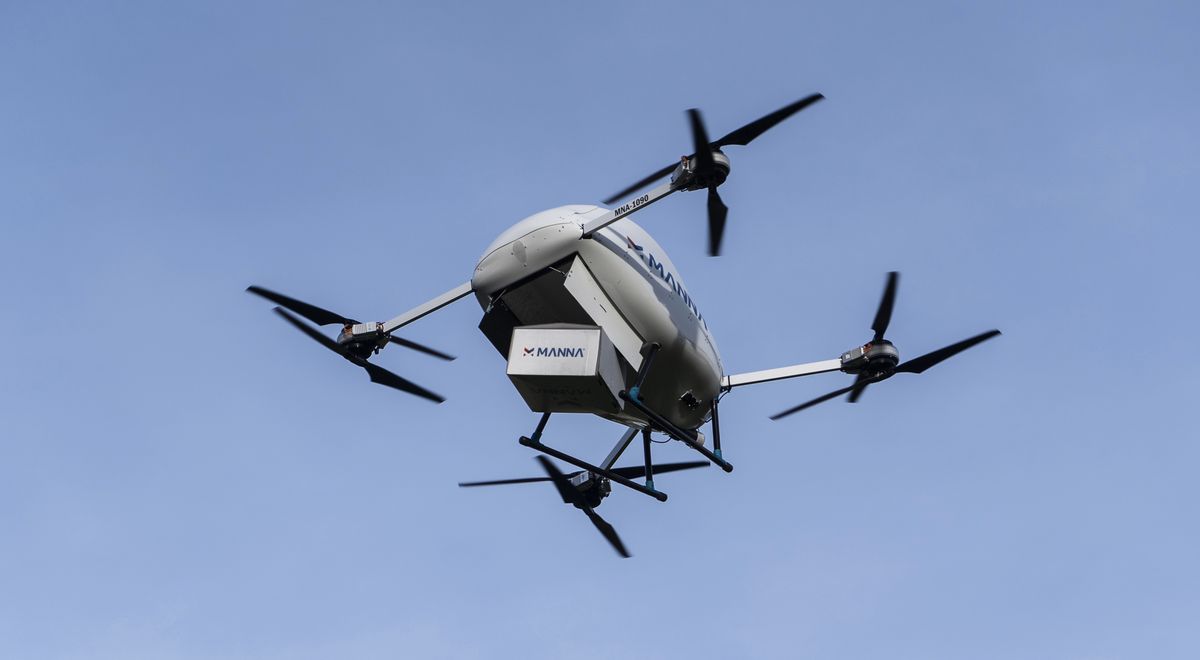
Manna Drone Delivery Partnered by Samsung
Irish startup Manna is known to offer drone delivery as a service to restaurant chains. Their drones can fly at an altitude of 50-80 meters at the speed of 60 km/h.So, these were some of the prevalent examples of recent market trends. So if you’re wondering how to start a logistics company and thinking about logistics app development, start with thinking about your USP. Build a logistics app with a twist that will keep you ahead of the competition. Ask yourself: which specific problem do you want to solve? And then think about an advanced feature that’ll help you solve this problem.
The best approach is to work with professional developers to ensure the high functionality of your app. The experience you deliver through your application lies at the core of its development. Only development experts can bring an exceptional app together, which is precisely why you must check out Biztech’s logistics app development model.
1. Location Tracking
Location tracking is one of the crucial technologies in logistics app development. With the help of location tracking feature or technology:
2. Map & Route Navigation
How will you get real-time updates about traffic or road accidents? By implementing Google Maps API, you can get live traffic data.
Route Optimization With Traffic Information
Time is an essential factor in the logistics industry. Suppose the driver doesn’t receive any information on the traffic congestion ahead on his route. This will delay shipments, and your business will suffer loss.
Therefore, a key option necessary is route optimization with the help of traffic information. This way, drivers can find out the fastest route possible to reach their destination.
Make sure to include the following features during logistics app development:
Imagine an intelligent computer in your vehicle that reports every detail - speed, fuel, tire pressure, etc. With this information, you can save maintenance costs by monitoring the vehicle.
Telematics is precisely this! Telematics is a method of tracking an asset with the help of GPS and onboard diagnostics. This helps record movements on a computerized map.
Telematics provides fleet operators with the information they need to manage fleets. With live fleet monitoring, you can monitor your vehicle 24*7. This way, you stay updated about the delivery process and take immediate actions in case of unethical activity. This option also improves fleet performance by raising awareness about the wear and tear on vehicles.
4. Blockchain Technology
Blockchain is a system of recording information that makes it difficult to change or hack the system. This decentralized distributed technology is transforming logistics operations. It helps in creating an efficient system. Secondly, the technology is highly effective in enhancing security by reducing frauds and errors.
Here’s how blockchain is improving the logistics industry:
The primary purpose of implementing AI in the logistics industry is to automate actions and save money. For instance, in automated warehouses: you can use Artificial Intelligence to organize inventory, collect data, and predict demand.
Other examples of AI in logistics include:
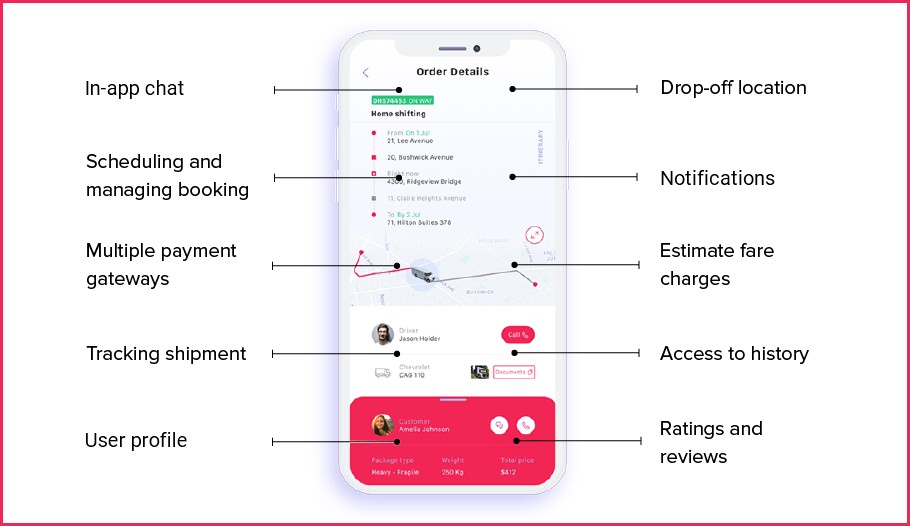
Sign-up is a crucial step for identification. Provide standard options such as phone number, name, and password for sign-in. This way, you can use the phone number (especially of the drivers) to carry out further procedures.
User Profile
If you want to collect the client database at an early stage, then the user profile can help you. However, if you wish to ask the client to create a profile only after signing a deal, you can do that. A personal profile for a driver is necessary because it will equip you with all the necessary information to link a driver to a specific delivery. Therefore, ensure that the driver profile includes:
The option to chat via the platform is critical functionality that logistics apps must incorporate. There can be a combination of chatbots and human agents in this segment. For example, a bot can handle simple queries that require instant solutions, whereas a live agent can deal with complex problems.
While live chat through the app is becoming immensely popular, many customers are still old-school and prefer to speak to a customer service agent in case of queries. Having an in-app call facility can connect them instantly without having to leave the app.
Notifications
Real-time alerts are a great way to inform users about necessary information while engaging them on your application. Notifications will help you keep your customers updated. Utilize notifications to assign new orders, make changes in any order, communicate with the users, and more.
Manage/Scheduling Booking
Let users book a vehicle to avail services in a simple manner. Let them pre-book by mentioning the exact date, time, and location for pick-up.
Multiple Payment Gateways
When it comes to payments, the more the options, the better the experience! Provide options like credit/debit cards, online wallets, cash on delivery and encourage users to use the app more often.
Tracking Shipment
The tracking facility is something fundamental. Your users are already expecting it from the transport and logistics app. Make sure you implement it in your end products.
Drop-off Location
Let users enter the exact drop-off location of their parcel either manually or with the help of the GPS.
Estimate Fare Charges
Users need to know the value they are expected to pay for the services. You can provide a built-in fare calculator to your customers. This feature will calculate the cost of services based on the size and weight of the package.
History
Let users revisit their previous transactions and invoices to keep everything on track and record.
Ratings and Reviews
Let your customers rate and review their experience with your app. Let them give feedback too that’ll help other users.
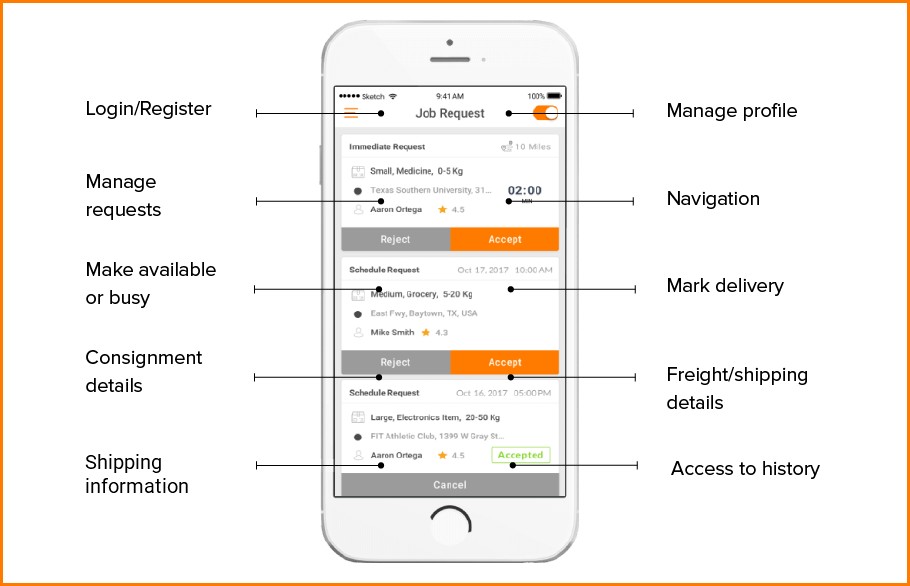
Like users, drivers can also need a sign-up feature. Let them sign up using their existing email IDs, phone numbers, or social media accounts.
Manage Requests
This is a basic feature that allows drivers/dispatchers to accept, reject or order based on their preferences.
Shipment Information
This feature provides the drivers with essential information on transportation orders. To avoid any confusion, make sure the driver has access to the following details.
Let the deliverers show their availability for services using options like marking self-availability.
Consignment Details
Help your app become popular by getting insights into the consignment that is to be delivered.
Manage Profile
Profile management is another most essential feature of a logistics app.
Navigation
This is a crucial feature for the deliverers. The navigation feature also gives information regarding the best route to the customers’ addresses to facilitate on-time delivery.
Mark Delivery
Allow deliverers to send alerts to customers and admins and give them updates about delivering a particular parcel.
Freight/Shipping Details
Let the deliverers access details related to freight (weight of goods, distance covered, fuel consumption, toll charges) and shipping (name, address, phone number, destination)
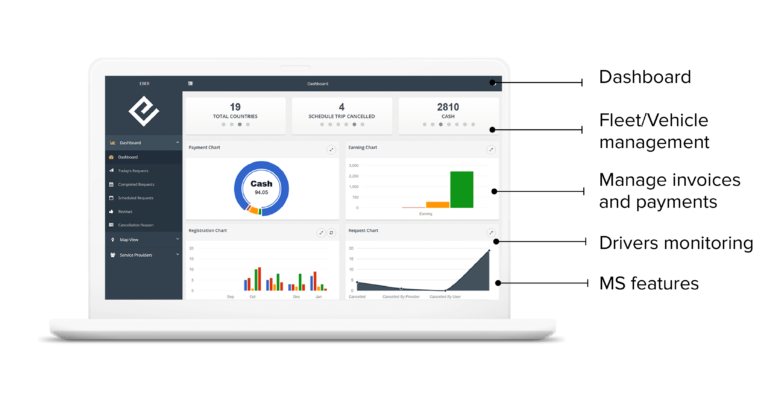
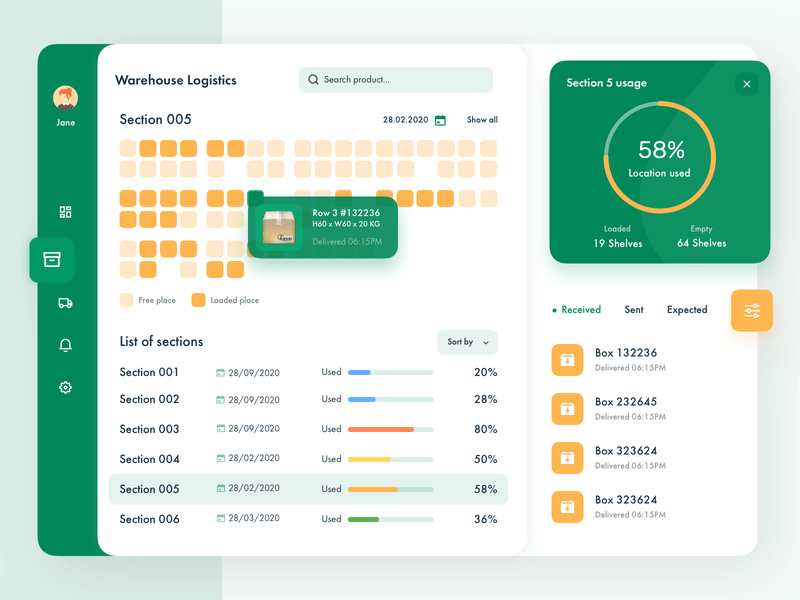
The dashboard displays all critical information about the users and drivers. The admin is also able to track the pending and completed orders with real-time data.
Fleet/Vehicle Management
With these features, admins can keep complete track of vehicles and shipments and update them whenever necessary.
Manage Invoices and Payments
The admins can generate/update invoices with the help of this feature. Admins can also manage payments, i.e., approve payments received by deliverers and analyze them.
Drivers Monitoring
Let this feature help the admin manage and assign tasks and monitor their on-road time, activities, and requests.
Let customers request a quote from the service providers to get an idea of the services’ cost and time.
Chat Support
Chatbots play a huge role in B2B and B2C industries. Most industries involved in any kind of service or product are equipped with chatbot app development.
Multilingual Support
Mobile applications usually provide multilingual support. It can boost the popularity of your app globally.
'Good Design is Good Business'
- Thomas John Watson Jr,
Chairman and CEO of IBM
A well-thought app design improves the overall business performance and market position. Therefore, it is necessary to pay attention to the UI/UX component of your logistics app. Pay attention to the UI/UX component of your logistics app.The bottom line: Keep the design simple, smooth, interactive, and without any error.
The basic rule of UX design is ‘complex but easy to use.’
Take Uber, for example. It tracks hundreds of vehicles in real-time. Its design has been consistent throughout the user base and is engaging at the same time. It is easy to use yet complex as it fetches the data of hundreds of vehicles in real-time.
Just like Uber, you must aim to deliver an appealing and intuitive experience at the surface without hampering the complexities. Work with logistics app development experts who can help you hide the complexities of your app through a powerful UX. Now, many people tend to believe that having a minimalist approach creates a clear and simple design.
Going back to where we began, ‘a well-thought app design’ - what your logistics app needs is some time, brainstorming sessions, and a clear strategy. If you need help developing a UI/UX strategy for your logistics app, we can help you. Check out our prototype demo and visually feel the impact of a powerful UI/UX.
Plus, a logistics app is an on-demand application, therefore, its development cost also tends to be higher compared to other industries. Hence, it becomes all the more critical to pick the right development partner. The cost of your logistics app development depends on:

Mobile Apps
10715
By Sanjoli
Ecommerce
Mobile Apps
4716
By chandni.pandya

Development
Mobile Apps
7905
By priyanka.ghosh
You are at the right place.
Projects Completed
Technical Experts
Happy Clients
Years of Experience
Book a free consultation call with us





By submitting this form, you agree to our Terms of Use and Privacy Policy. All information provided will be kept strictly confidential.