
3711
Cross-Platform App Development Trends in 2026
5 min read
It was in June 2007 when the original iPhone was released. And a few months later, in September 2008, the first Android phone HTC Dream was released.
Back then, native development was the only way to build mobile applications. However, you had to build separately for Android and iOS.
The inconvenience, longer development cycle, and low development costs led to the invention of cross platform app development.
Yes, cross-platform apps are one of the hottest app development trends you will ever see! So much so that social networking giants like Instagram (with 1 Billion Monthly Active Users), have also used cross-platform technologies like React Native.
While Instagram was originally built as an iOS-only app with the help of native app development, its Android version was introduced later. And today, they use React Native to deliver consistent user experience across both platforms.
Thus, cross-platform apps are everywhere! But, is it the right choice for your startup? Will you save more with technologies like Flutter App Development or end up affecting your business growth?
This blog here will help you find answers to these questions so you can decide for yourself. Check it out now!
These applications run identically on multiple platforms and share a common, reusable code. Such apps are also called platform agnostic mobile development apps as they don’t rely on the platform they run.
P.S.: Cross-platform apps are not the same as Hybrid apps as many people tend to believe! Hybrid applications are built by combining native and web technologies together. Here, you have to embed web codes (written in HTML, Javascript, and CSS) into the native code for developing hybrid applications.
Coming back to cross platform applications and their strengths, here are some noteworthy benefits of cross platform mobile app development!
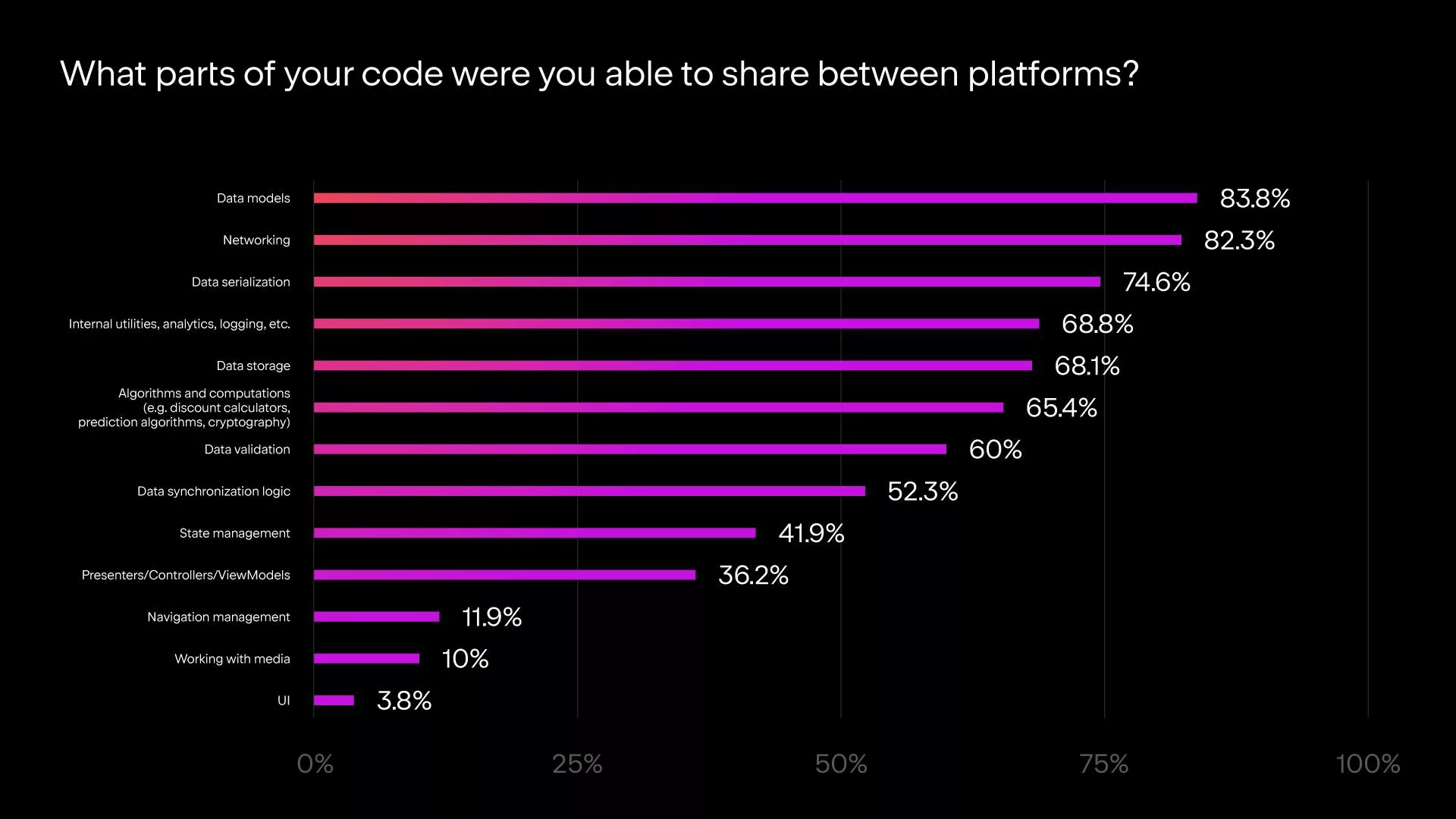
Did you know that a minimum of 50% to 80% of your code can be repurposed and reused? The developers don’t have to code everything from scratch. Rather, they can reuse codes to build a functional mobile app that works seamlessly for multiple platforms.
A business can quickly release more apps with a shorter time to market!
But not anymore! They can develop cross-platform apps for the price of one and reach a larger audience segment.
How can my startup benefit from this venture?
Are there any real-life examples of startups that benefited?
Here, I have mentioned a few benefits that startups can get the maximum benefit from. Check it out!
In either case, you are left unsatisfied. And if you want to modify the product, you will need to elongate your development cycle and pour in more resources for the development.
Being a startup, this could impact your financial standing. And not just that, your plans will have to be changed accordingly, the release date will be pushed. It’s a vicious cycle we wouldn’t wish anyone to fall into.
Creating an MVP (Minimum viable product) as the first iteration can save you from this! With the help of cross platform native app development, you can easily release an MVP in a very short time.
This helps you gauge market acceptance and validate the product idea before the app is developed. Once the MVP is accepted, you can go all in and start working on the complete version.
How MVPs can help startups? An example!
Have you heard of Dropbox, a company offering file synchronization, cloud sharing, and personal cloud? The company first shared a video demonstrating its product’s features.
This video explaining how users can sync and save their files across devices acted as an MVP for them. The positive response received by viewers reassured them to develop the product in a full-fledged manner.
By using cross platform mobile app development frameworks, you will be able to build apps accessible to all, irrespective of their OS.
Discord, Airbnb, CoinBase, and Delivery Hero are some applications that use cross-platform development.
Since the codebase is shared, you can easily bring custom changes and implement those for multiple platforms.
In addition to these frameworks, there are tools and libraries that help you achieve faster time to market.
Cross-platform development makes it easier for you to bring those updates. When you hire cross platform app developers, you will be able to bring those updates to life quickly as the codes will have to be changed once as per your need.
Clearly, there are many benefits of cross-platform app development! But, are they enough for your startup?
Before you decide that, you must be wary of these downsides too! Let’s have a look.
Do you know the reason why?
Well, for starters, these apps use native and non-native components together, which makes the code quite complex.
Also, an additional abstract layer between the device hardware and code can result in lags and slower performance.
There may as well be compatibility issues and platform differences resulting in a poor user experience of your app.
However, with the help of a cross platform app development company, you can combat these challenges and build a sophisticated app for your startup.
An experienced developer should be able to develop a robust, scalable, and secure app for you!
Will a native app be more suitable for your startup?
Let’s compare the two types to see for yourself!
If you are in a similar position to quickly develop and launch your product in the market, cross-platform development is your best bet.
Developing native apps for each platform is obviously time-consuming as developers will have to build 2 different platform-specific apps. So, more time to ideate the product, develop the product, test the code, and prepare them for launch.
Winner: Cross-platform apps
This level of optimization is not possible in cross-platform apps as the frameworks need to accommodate multiple platforms. Thus, there may be limitations in optimization due to the need for compatibility across various environments.
Winner: Native apps
Whereas, the use of third-party tools in cross-platform apps may make it a little less secure compared to its native counterparts. But, that may not be a concern if you use best development practices and up-to-date tools.
Security is a key concern when you are developing apps like eCommerce, banking, and other finance apps.
Winner: Native apps
The cost of developing cross-platform apps is obviously less as the codebase is shared and you won’t have to hire individual developers for different platforms.
Winner: Cross-platform apps
Furthermore, let’s check out the differences at a glance!
| Native | Cross-Platform | |
|---|---|---|
| App Types | Complex apps | Simple apps and MVPs |
| Coding | Separate coding for Android and iOS | Single codebase |
| Libraries | Creating libraries is necessary | Creating libraries isn’t necessary |
| Number of developers | At least two native developer proficient in their respective native platform (iOS or Android) | A single type of developer can handle developing cross-platform apps. It is to note that number of developers needed will depend on the project’s complexity and scale |
| Latest Trends | You can leverage all the latest trends of the platform | You can’t leverage all the latest trends of the platform |
| Features | No limitations in terms of features | You will have to plan the features carefully |
| Tools | Tailor-made tools specific to a platform | Universal tool for all platforms |
| Time | Time consuming | Time-saving |
In either case, make sure you ask yourself these questions and decide on the basis of the answers!
Seek answers to these questions to determine if cross-platform apps really are the best choice for your startup!
If you have, and are looking for the easiest cross platform mobile development framework, here are some of the best ones.
1. React Native
It is an open-source UI software framework developed by Meta Platforms. The framework is written in Java, Python, Objective C, and C++ to build mobile apps for multiple platforms like Android, iOS, tvOS, macOS, Windows, etc.
Advantages: Huge developer community, stable mobile app growth, live and hot reloading, pre-developed components, code reusability,
Disadvantages: Difficult to debug, it is still an immature framework, difficult to develop apps with complex UI.
2. Flutter
It is an open-sourced software development kit built by Google. The SDK is built using programming languages like Dart, C, and C++. With Flutter app development, you can develop mobile apps for multiple platforms using a single codebase.
Advantages: High performance, hot reload, instant updates without plugin needs, quick UI coding with custom widgets, and cross-platform rendering engine.
Disadvantages: Lack of third-party libraries, iOS issues, and large app size.
However, you can make up for the disadvantages as you hire Flutter developers of quality. They will help you overcome these issues and develop a robust, scalable, and profitable mobile app.
3. Ionic
Built using Javascript and Typescript, Ionic is popular for hybrid app development. With the help of HTML, JS, and CSS component libraries, it is apt for developing highly interactive user interfaces.
Advantages: Quick development and faster time to market, development in the browser are possible except for native functionalities, plenty of UI components, and multiple plugins allowing smartphone use.
Disadvantages: Builds may crash randomly, there may be a conflict between native plugins, and unclear error messages for debugging.
4. Xamarin
Xamarin is a Microsoft-owned software company. The open-source platform is suitable for developing applications for Android, iOS, Windows, etc.
Advantages: Native-like performance, simple app maintenance, integrated testing, open-source, XAML hot reload, fast development.
Disadvantages: Large app size, limited access to open-source libraries, can be expensive for Enterprise users, Not suitable for heavy graphic apps.
But, your lack of experience can’t hold you back if you research well and make wise choices throughout. Hope this article helps you analyze your project requirements well and decide if cross-platform apps are the way to go.
Want expert opinion and want to get your app idea validated? Our app developers can help you with that. Get a consultation from our experts or even avail cross platform app development services if you decide to build a profitable app for your startup.
Decide wisely!
Artificial Intelligence (AI)
Development
10811

By Devik Gondaliya

Development
ERP
2796
By Devik Gondaliya

Artificial Intelligence (AI)
Development
52808
By Devik Gondaliya
You are at the right place.
Projects Completed
Technical Experts
Happy Clients
Years of Experience
Book a free consultation call with us





By submitting this form, you agree to our Terms of Use and Privacy Policy. All information provided will be kept strictly confidential.