
3506
Applications of Augmented Reality in The World of Retail
6 min read
3506
6 min read
Augmented reality is more than just a possibility. It has taken a greater relevance in the COVID-led world. Retail brands have become more creative in using the technology to increase engagement and sales.
When its physical retail stores were shut, the mega beauty brand Ulta turned to AR. Their virtual try-on tool GLAMlab allows shoppers to test out thousands of make-up products. Ulta says GLAMlab has seen a “surge in usage” since the pandemic began. Their user engagement increased seven-fold. They are also piloting an AR-based try-on service inside its physical stores.
Before the pandemic, 79% of shoppers tried on items before buying. For 55% of customers, seeing, touching, and trying on apparel is the “most important” factor when deciding to shop in-store vs. online.
With customer safety becoming a priority, more retailers are beginning to use AR. If you are looking for some inspiration to incorporate AR technology into your business, this post is for you.
The furniture industry was one of the earliest adopters of AR technology. Brands like IKEA, Wayfair, Target, and Houzz became trendsetters by giving online shoppers access to visualizing products in their own space.
For starters, users first choose an item from the online database. After selection, shoppers point their devices to the desired place. A realistic 3D version of the item pops up on their mobile screens. Further, they can change its pattern or color, and move it to check the size and fit.
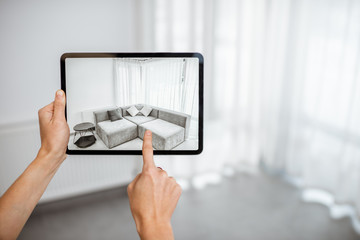
Ikea Place was one of the first apps to use Apple’s ARKit tech. With Ikea Place, customers can browse through 2,000 products and view 3-D renderings from different angles. The app further directs to the website to complete the purchase. According to IKEA, AR apps provide 98% accuracy.
Wayfair, the online furniture store, provides customers with the possibility to use WayfairView. The app allows customers to position 3D images of furniture in their own interiors.
Instead of mere guesswork, AR helps shoppers make an accurate purchase decision. This drastically reduces product return.
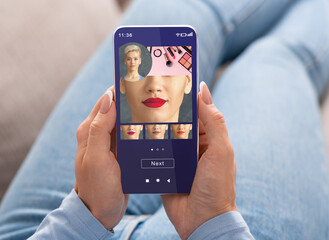
Technology in the beauty industry is not a new thing. There were already virtual consultations and 3D visuals to imagine plastic surgery. It’s just that in the pandemic era, the pace of innovation is accelerating.
L’Oréal is set to launch their “Perso” personalized beauty device. The device provides at-home personalized formulas based on real-time data and analysis. L’Oréal Paris also has AR-powered try-ons on their webpage and mobile app. The app allows shoppers to virtually try on over 100 products, including hair color, eye shadow, and lipstick.
AR-based virtual try-on is a popular trend in the beauty sector. With a visual makeup try-on app, users can test lipsticks, eyelashes, and other makeup accessories to get the perfect look. These apps enable beauty businesses to increase sales, user engagement, and customer satisfaction. Moreover, it also reduces the chances of return orders.
“Augmented reality is going to change the way that the fashion industry creates, showcases, and retails its products. The year ahead will see an explosion in opportunities for this immersive technology to totally redefine what we understand as fashion today,” said Matt Drinkwater, head of the Fashion Innovation Agency.
In the fashion industry, AR has risen as a powerful solution for both retailers and customers. For customers, AR offers a more seamless shopping experience. For brands, it drives sales on top of engagement.
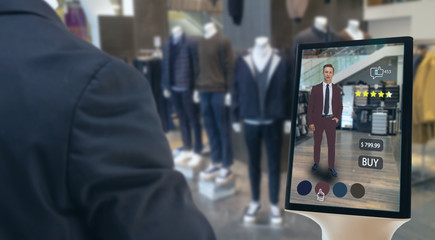
Gap has an augmented reality app called “DressingRoom”. The app allows users to virtually try on clothes. Users first enter information like height and weight, the app then places a 3D model in front of them.
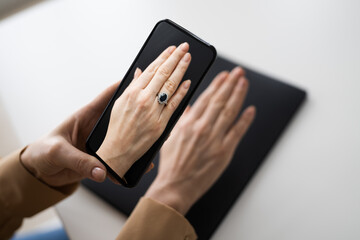
Customers prefer offline stores when buying jewelry as online doesn’t give them a chance to try on products. Browsing rings, necklaces, and other jewelry doesn’t give a real idea about looks, and details. But luckily, with AR it is possible to allow customers to “try before buy”. Jewelry AR apps also allow user data collection which jewelry retailers can use to personalize sale offers or adjust the marketing strategy.
Marker-Based Augmented Reality
Markerless Augmented Reality
It’s time that you decide what type of app you want to create for your business because the possibilities are endless.
We are an AR app development firm that understands the need to deliver interactive experiences that drive sales. We can guide you through all the stages of development right from iteration to bug testing. Our development process typically includes - requirement analysis > initial stage design > development > quality assurance. Tell us about your app idea, and we can design and develop a fully-functional, feature-rich AR app for your retail business.
All product and company names are trademarks™, registered® or copyright© trademarks of their respective holders. Use of them does not imply any affiliation with or endorsement by them.
Mobile Apps
10715
By Sanjoli

Ecommerce
Mobile Apps
4716
By chandni.pandya
Development
Mobile Apps
7905
By priyanka.ghosh
You are at the right place.
Projects Completed
Technical Experts
Happy Clients
Years of Experience
Book a free consultation call with us





By submitting this form, you agree to our Terms of Use and Privacy Policy. All information provided will be kept strictly confidential.